How OEMs Can Win Specifications in North America and Europe with Immersive Design CEUs

Continuing Education Units (CEUs) remain one of the most effective ways for product manufacturers to engage architects and interior designers across North America and Europe. Because professionals must complete accredited learning to maintain licenses and certifications, CEU programs provide OEMs with direct access to decision-makers who influence product selection and project specifications.
Yet expectations have changed.
Traditional PowerPoint slide presentations now compete with digital-first experiences. Today’s architecture and design (A&D) professionals expect learning that is visual, interactive, and relevant to real projects. Forward-thinking OEMs are responding by transforming conventional CEUs into immersive experiences.
Why CEUs Matter for Specification-Driven Sales
For manufacturers, the true value of education lies in specification.
Architects and designers frequently determine which products are written into project documents. Once specified, products are far more likely to be purchased, making early engagement a critical driver of business growth.
Well-designed CEUs help manufacturers:
- Build trust through education rather than promotion
- Position products as solutions to real design challenges
- Become top-of-mind during specification
- Influence decisions early in the project lifecycle
In short, effective CEUs can directly translate into pipeline and revenue.
Accreditation Across North America and Europe
To be valuable, CEUs must align with recognized professional bodies.
In North America, many professionals earn credits through organizations such as:
- The American Institute of Architects (AIA)
- The Interior Design Continuing Education Council (IDCEC)
- The Association of Registered Interior Designers of Ontario (ARIDO)
Across Europe, continuing professional development (CPD) is similarly required or strongly encouraged by national institutes and chartered organizations. Given that these credits are mandatory or professionally essential, CEU programs offer OEMs a rare, guaranteed audience of qualified specifiers.
The Shift Toward Experiential Learning
Adult learning research consistently shows that active participation improves retention compared to lecture-only formats. Immersive environments allow professionals to explore information rather than passively receive it.
This is particularly important in digital settings, where attention is fragmented and conventional webinars struggle to stand out.
What Is an Immersive CEU?
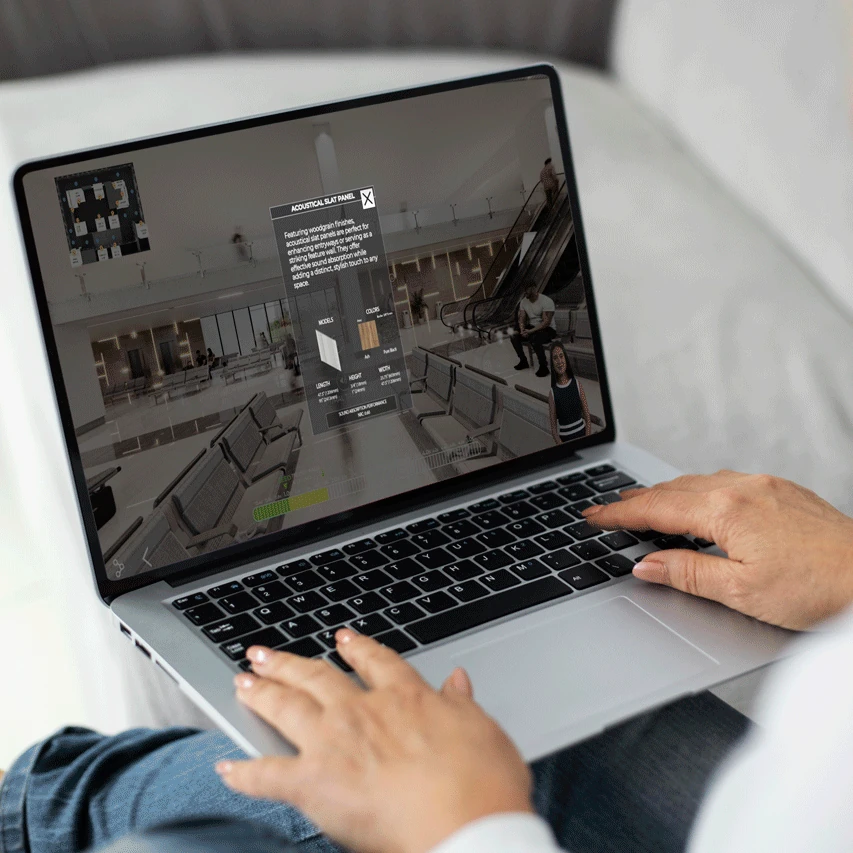
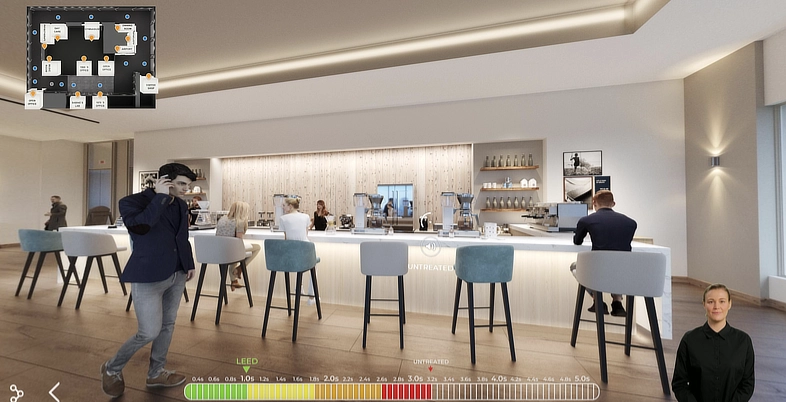
An immersive CEU replaces static slides with a navigable virtual experience. Participants move through a photoreal environment where educational content is embedded directly into real-world scenarios.
Instead of being told how a product works, learners can:
- Examine installations at true scale
- Explore materials within architectural contexts
- Visualize products, assemblies and hidden components
- Compare configurations and options
- Access product information and/or technical data at relevant moments
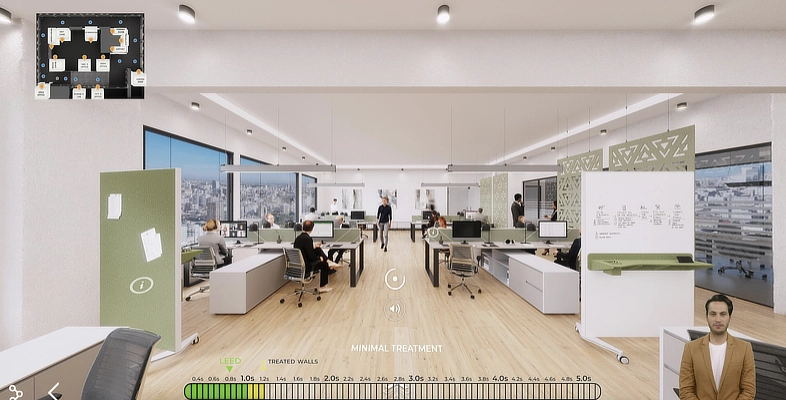
This mirrors how design decisions actually occur in practice and the benefits are many:
- Immersive CEUs Drive Greater Specification
Immersive education influences not just engagement, but decisions.
- Stronger Product Understanding
Complex systems become clear when seen in context, reducing uncertainty during specification.
- Higher Recall at Critical Moments
Interactive experiences create memorable associations that resurface when designers select materials later.
- Perceived Innovation and Leadership
Manufacturers using advanced learning formats are often viewed as forward-thinking partners.
- Reduced Risk for Specifiers
Confidence increases when professionals fully understand performance, integration, and application.
Together, these factors shorten the path from awareness to specification.
A Strategic Digital Asset for OEMs
Immersive CEUs also generate reusable content that supports multiple business functions:
- Sales presentations
- Virtual product experiences
- Trade shows and events
- Online marketing campaigns
- Digital product catalogs
- Training for reps and distributors
This transforms education from a one-time activity into a long-term strategic asset.
Aligning With Digital Transformation in the Built Environment
Across North America and Europe, the architecture, engineering, and construction sectors are rapidly adopting digital workflows, from BIM coordination to remote collaboration.
Professionals increasingly expect learning experiences that reflect these tools. Immersive CEUs meet that expectation while maintaining accreditation standards and educational integrity.
The Future of Design CEUs
Manufacturers that treat CEUs as strategic engagement platforms, not compliance exercises, gain a meaningful competitive advantage.
Immersive formats transform education into experience, positioning products within real design scenarios while building trust with the professionals who specify them.
For OEMs seeking deeper relationships with the architecture and design community, immersive CEUs represent a powerful intersection of education, brand storytelling, and business growth.
Frequently Asked Questions (FAQ)
What is a design CEU?
A design CEU is a continuing education course focused on architecture, interior design, or building-related topics that helps professionals maintain licenses or professional credentials.
Why are CEUs important for manufacturers?
CEUs provide direct access to architects and designers who influence product specifications. Educational engagement builds trust and increases the likelihood of being specified.
Are immersive CEUs accredited?
Yes – if developed according to the requirements of accrediting bodies such as AIA, IDCEC, or relevant European CPD organizations.
Do immersive CEUs work for virtual audiences?
They are particularly effective online because they replace passive viewing with active exploration, improving engagement and retention.
How do CEUs lead to more specifications?
Education builds familiarity, confidence, and trust. When professionals understand a product’s performance and application, they are more likely to include it in project documents.
About Tektus Digital
Tektus Digital specializes in creating immersive digital experiences that help manufacturers present complex products with clarity and impact. The company develops end-to-end immersive CEU programs, from instructional design and visualization to production, deployment, and ongoing support, enabling OEMs to engage the architecture and design community in more meaningful ways while strengthening specification outcomes.
Beyond CEUs, Tektus delivers immersive virtual experiences and photoreal renderings that bring products to life across the entire product lifecycle, from development and in-context visualization to scalable digital product catalogs, helping elevate brand expression, accelerate decision-making, and drive measurable sales impact.